

Everyone who comes into my home relaxes.
For a long time I never actually thought about it. It’s just my home. This was just how I lived and how I wanted to welcome people - somewhere that was cosy, relaxed, they felt they could take their shoes off and put their feet on the sofa - no standing on ceremony and food that would never make a table in a restaurant - but was hearty and wholesome and left clean plates all round.
I’m currently in an apartment and my teenage nephews love it. I never understand why - they just tell me ‘ah you just make it cosy. Feels nice and relaxed.’
It has taken me a long time to understand that I hadn’t invented this. That I was, in fact, remembering it.
What got interrupted
Somewhere around 1850, my ancestors were working land in Ireland. If you go back far enough in your own family history - your ancestors probably did too.
They marked the seasons - but because their lives depended on understanding when to plant, when to harvest, when to wait.
Then the rents were raised and they were put off their land. The generations that followed, had to then survive. This was a completely different survival because they were dependent on a system to support them and not the land they came from, or the one they would return to when they passed.
You don’t pass down the old ways when you’re trying to keep the family fed in a city that wasn’t built for you. You don’t teach your children to read the seasons when the seasons don’t matter anymore. You teach them how to survive in the system - the shift, the factory, the wage.
The ‘knowing’ from the previous life didn’t die. It just stopped being talked about.
Before the calendar was ever a grid
My ancestry is Celtic. Again - these traditions are applicable to indigenous races everywhere.
The Celts didn’t mark beginnings on the first of January, which is an entirely arbitrary date appointed by Caesar - I’ve written a blog on this (insert link to blog). The Celts marked time by the land. The four festivals mark real turning points in what the land and body are doing:
Imbolc (February) - the midpoint between Winter Solstice and Spring Equinox - the first stirring of life.
Beltane (May) marked the time on the farming calendar for cattle to be driven out to summer pastures.
Lughnasadh (August) marked the beginning of harvest season - a time for feasting, storytelling, and giving thanks for what the land had given.
Samhain (November) the Celtic new year, when the hearth fires were extinguished and relit from the communal bonfire.
These weren’t some little quaint traditions. They were a way of reading the earth, by people who paid close attention, for thousands of years.
None of this happened in temples. It happened in kitchens and at bedsides and on hillsides and around fires.
I wrote an instagram post recently about returning to Ireland.
My parents would pack us in a car every Friday and drive over the border in the 70s and 80s’ with a car full of kids to escape the ‘noise’.
My granda told us to run round the field for an hour to get some fresh air and build an appetite for dinner. Dinner was always the same. Bacon, cabbage and potatoes. He made it every day of his life. One sliver of bacon, a big spoon of cabbage and a huge pot of boiled potatoes in their skin placed on the table with a knob of butter.
After dinner they would tell us stories of our ancestors working the land, the faeries and how if you visited a faerie ring you would disappear for years and come back the same age but everyone else would have moved on. They told us stories of meeting people on the way back from the market only to get home and find the person had died - they had met their spirit. And how the black dog that chased my granda from the church graveyard as a nipper was actually the devil. (no wonder we’re not right in the head).
But my grandparents weren’t telling folk tales about imaginary creatures. They were preserving history (The Tuatha Dé Danann were Ireland’s original divine race) in which the ‘divine’ had retreated into the landscape and still moved through it - diminished by centuries of Christianity but never gone.
To this day there are fairy circles left unmolested in farmers’ fields despite being in the way of planting, because the folklore record is full of what happens to those who dare destroy the abode of the good folk.
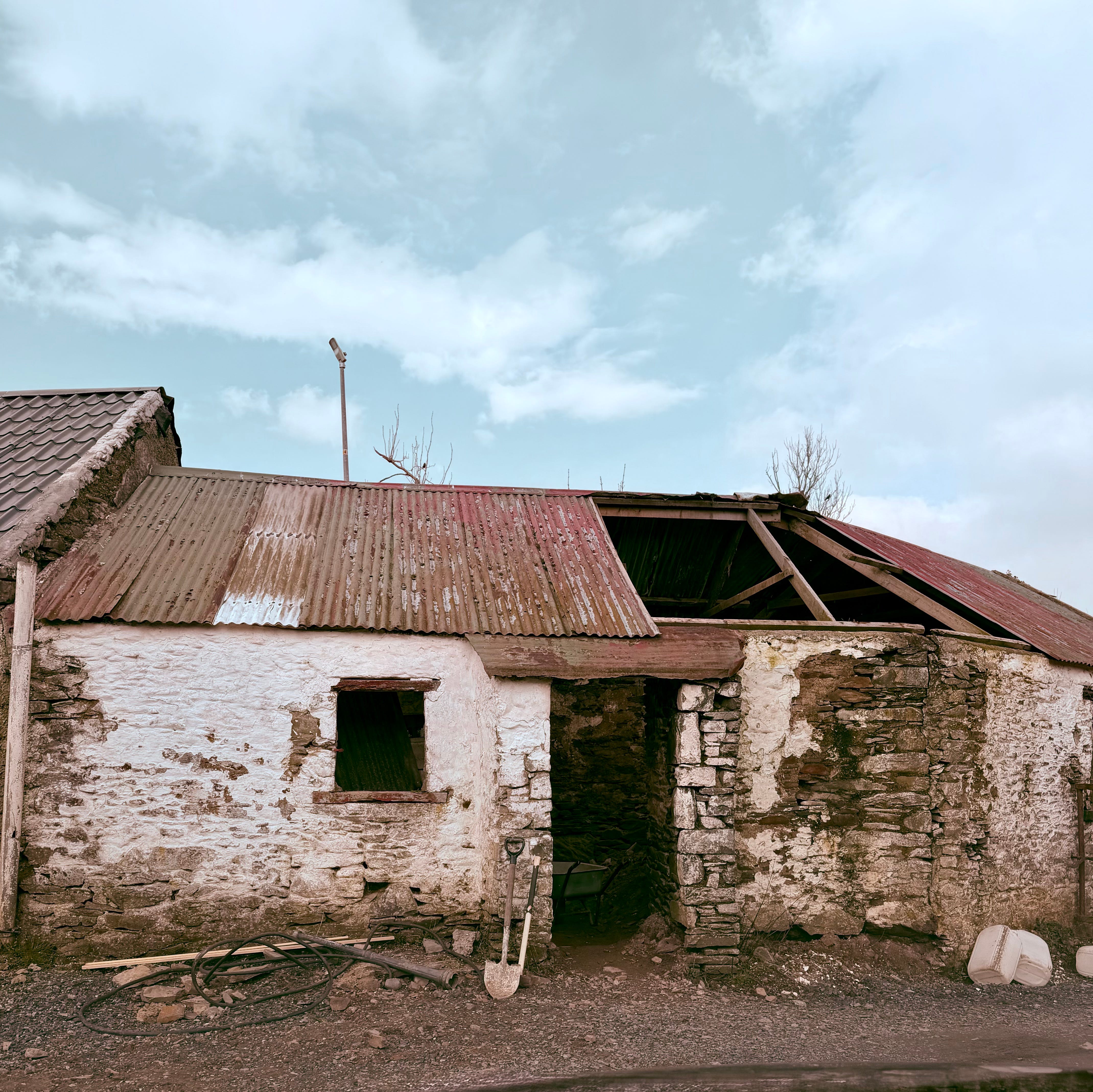
Strangely, but not surprisingly, I was able to trace the place of my ancestors back to a field with the help of census records. Beside that field is a fairy mound with trees around it in a circle. I searched for it on google maps - it’s still there today.
The knowledge in the hands.
The women who held the community together years ago were respected for their knowledge, healing practices, and mystical rituals. Those celtic traditions believe that everything has a spirit - ancestor reverence, seasonal festivals, and the natural cycles of the earth.
The point is that it wasn’t separate from ordinary life - It was ordinary life. The blessing said over the bread. The herbs hung to dry after Midsummer. The fire tended with prayer. The kettle was put on before a word was spoken.
In the old Celtic household, the hearth was the centre of the home. ‘Anam’ meaning soul. Literally. It was never put out and keeping it alight was an act of both practicality and devotion. Is this where we get the term ‘holding a light?’
The kitchen witch, in Celtic tradition, is a woman who understands that everything in her domain - the fire, the food, the home, the crossing of seasons. She doesn’t need a place to worship separate from her daily life. Her daily life is the ritual space.
She knows that the way you make something, the attention you bring, the intention underneath the action, changes what comes out the other side. Cooking with love? Tastes much better than a load of stuff shoved in a pot.
With the emergence of Christianity and the decline of Celtic paganism, the church became afraid of their practices and were suddenly at risk of being accused of witchcraft. The very practices that had once brought healing and community support were now seen as crimes.
The kitchen witch - what it actually means
The kitchen witch is simply that woman - a ‘High Priestess of the Ordinary’ - specifically located in the hearth, the home, the daily act of nourishing. To my knowledge she doesn’t wear a pointy hat or have a big cauldron - but she might have a pot on the open fire.
At its core, kitchen witchery is about finding magic in the mundane - infusing everyday tasks with intention and spiritual significance. The kitchen witch sees the kitchen not just as a place to prepare meals, but as a sacred space where nourishment, healing, and protection are cultivated.
My ancestors weren’t superstitious telling tales. They were the living carriers of a tradition.
Then the famine came. The rents were raised and they were driven off the land. They moved to Belfast in search of work. The connection to the specific physical places - the fairy forts in the fields, the hawthorn trees, the mounds - was severed.
But they kept telling the stories. At the dinner tables. To me.
The person I was becoming without knowing it
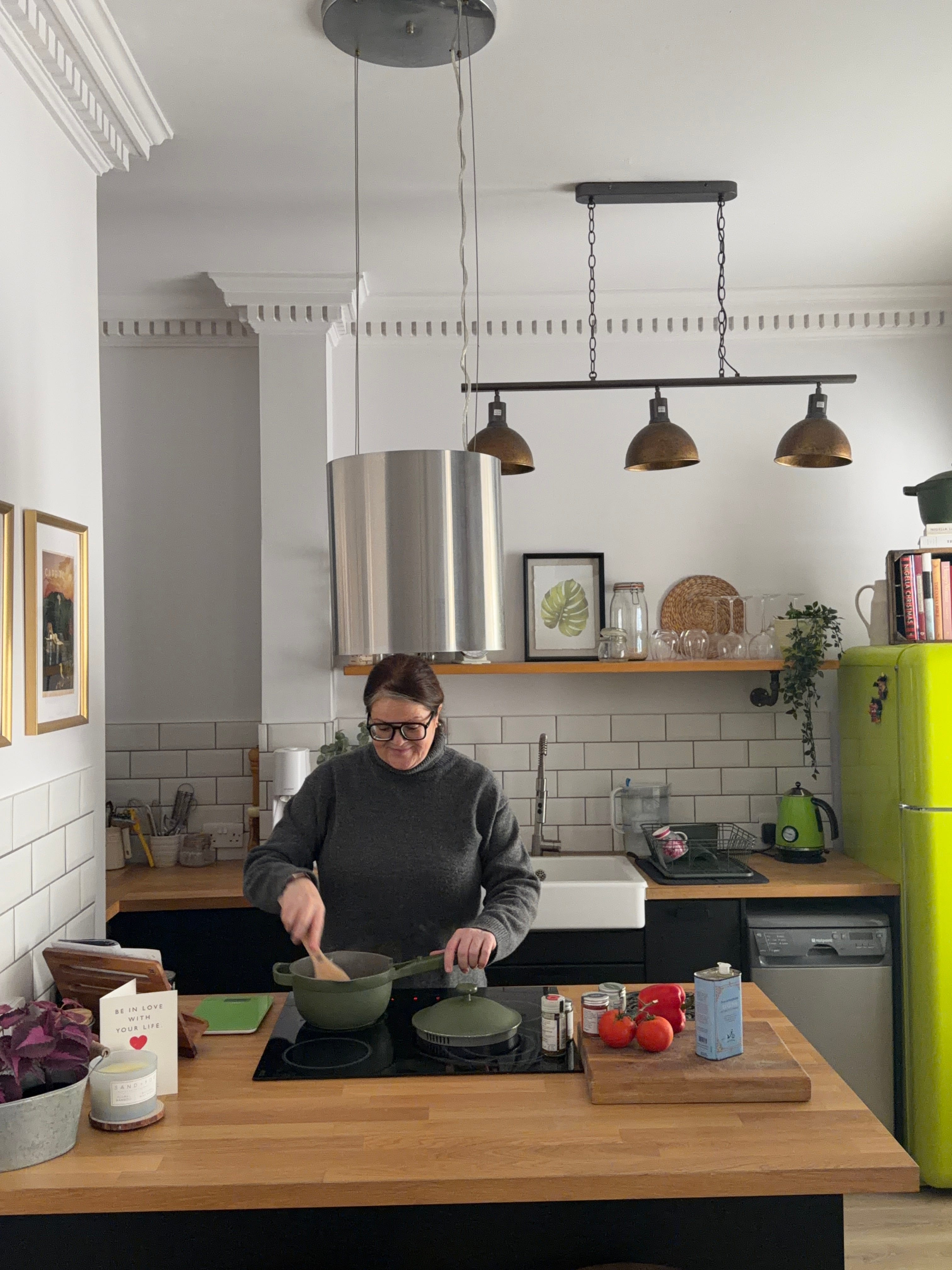
Nobody taught me to cook the way I cook. I don’t follow recipes much - I follow instinct, season, what’s in the kitchen, what feels right for the day. I cook to nourish, not to impress.
I didn’t set out to make my home feel the way it feels. I didn’t read a book about creating warmth or follow someone’s advice about ambience. I just... made a home.
And it was only when I quit corporate life in 2023 and started slowing down that I found myself in my kitchen, actually present, still.
This wasn’t just cooking. This was a practice.
Êhe kitchen is everything in a house to me. If I had the tiniest space in the world I’ll still have to have a big kitchen. The attention I bring to a pot of soup, the satisfaction of feeding someone something that makes them feel held. It has a lineage. It goes back much further than me.
I had been a kitchen witch without knowing the word for it.
What we’re finding our way back to
I’m not unique in this. Something is stirring in a lot of women around my age - women in their late forties and fifties who spent decades running in a system that they were never built for or wired for. Now, in this strange second chapter, many are finding themselves drawn back toward something simpler. Living seasonally, by the moon, holding community for other women - not pitching ourselves against each other like meat. Many realising that fitting in a patriarchal system was never their dream - that was their mothers dream to lead within the system - to win. To be equal to the men. But we are equal. We just don’t need to fight for it. None of us do. We can exist together, like we always have.
This is not a trend. This is not wellness culture repackaging ancient wisdom in linen and ceramic. This is something older moving through us; Recognising itself in our hands, in our kitchens, in the way we instinctively turn toward the hearth when the light goes.
We didn’t lose it. It was just waiting.
The cycle breaker
There’s a term for someone who interrupts a pattern that’s run through a family for generations. Cycle breaker - the person who stops carrying what wasn’t theirs to carry and starts recovering what was lost.
I used to think of that in terms of the harder things. The survival patterns. But cycle breaking goes both ways. You can break the painful cycles and recover the good ones. The ones that got interrupted not because they were wrong but because circumstances meant they couldn’t continue.
My ancestors tended land and marked seasons and made homes that nourished. They lost that life through no fault of their own. The generations between us did what they had to do.
And now, without anyone telling me to, I find myself (subconsciously) doing the thing they did - feeding people with care, tending the hearth, following the rhythm of the year without quite knowing why it matters.
I’m not reinventing anything. I’m returning. But as the oldest of a big family and parentified young, add to that 30 years in corporate - one of the biggest challenges I’m facing is how to receive. I’m used to holding everything together - like my ancestors. But I have no concept of receiving. The feminine is about receiving. I don’t mean sitting on your backside and being handed things but accepting with grace things that come to you. This is an alien concept.
So, being a cycle breaker for me isn’t just about recovering the soup and the seasons. It’s about breaking the pattern of the woman who holds everything for everyone else but doesn’t know how to let herself be held. It’s about learning that I can tend the hearth and still be allowed to sit by the fire.
This isn’t about moving back to a field in Ireland - feck me, I’ve been a corporate VP, I like expensive bedding and turning left on a long haul flight - this is about bringing that field, that rhythm, and that fire into the life I am building right now.
The land my ancestors worked in is in the past. But the practice - the attention, the warmth, the kitchen as sacred space - that I can hold. In the 21st century with running water and electricity. That I am holding.
And now I know that I am. I am the cycle breaker.
I am coming home.
(wearing jeans and trainers - no pointy hat and cauldron here)
Wonderful that you're connecting with your ancestry, Ciara, I also went back to the old Grogan house in Cobh, County Cork. Irishness was passed to me - i grew up in South Africa, as did my parents, in music mainly, my earliest memories are singing songs in English andcin Irish, and it's given me a lifelong passion for the ountry and its history and the Irish language and I go to County Cork from my home in Luxembourg whenever I can. Look forward to reading more of your writing!